What you get back
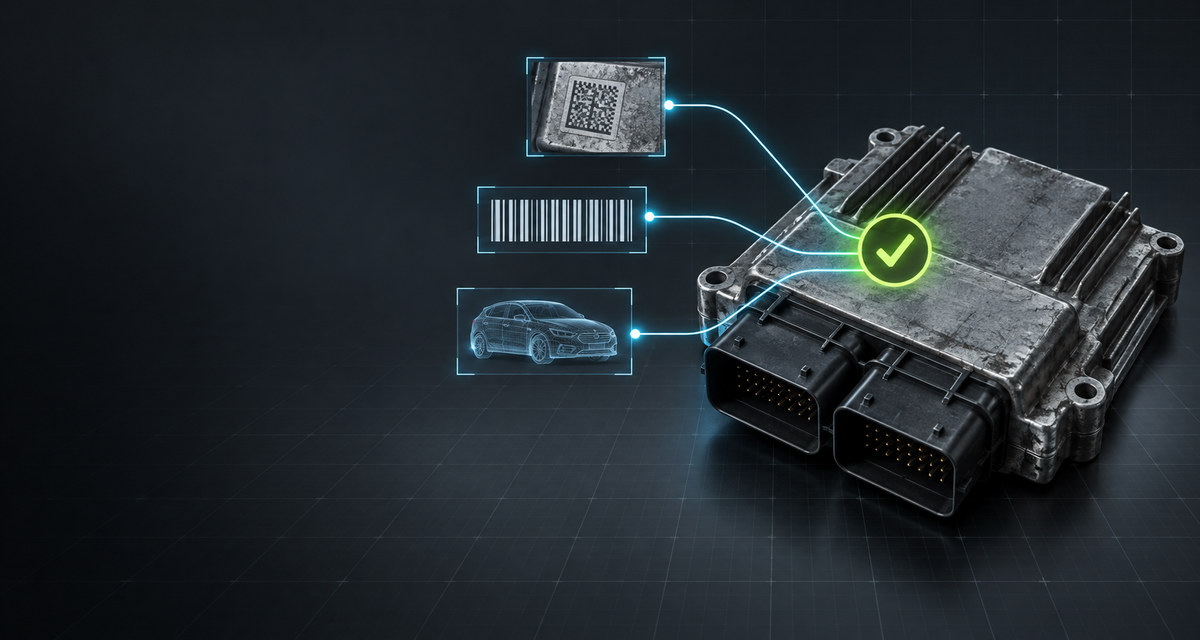
You receive an unambiguous status – confirmed match, candidates for review or no match – and, for a match, the OE number with its source and confidence.
A typical day-to-day use case
A workshop asks a parts dealer for a replacement headlight and supplies a number from the old part, the description and the VIN. The shop or inventory system sends these details together with the reading of the label photo in one call. A confirmed match puts the OE number on the quote line, candidates are reviewed by a team member using their scores and reasons, and without a match the adviser asks specifically for further details.
The tangible business value
Images, documents or identifiers become a practical working basis. Your team saves capture time, works more consistently and can focus on the business decision.
- Saves search, capture or waiting time because the task starts and finishes inside the familiar system.
- Reduces transfer and matching errors because information is not retyped or reconciled across separate lists.
- Makes uncertainty and review points visible before they become a wrong approval, order, publication or charge.
Who benefits most
| Area of use | The practical advantage |
|---|---|
| New, remanufactured and used parts trading | Improves matching, product data and multichannel sales for new, remanufactured and used parts. |
| Workshops | Reduces manual transfer and mismatches between the vehicle, work order and required part. |
| Vehicle recyclers | Connects vehicle intake, dismantling, part capture and stock marketing in one consistent data flow. |
| ERP, DMS, shop and software providers | Embeds the capability in the system of record through an API and processes results without another manual step. |
How the endpoint fits your workflow
The endpoint handles one clear task and passes its result straight to the next step.
- An authorised image, document or existing identifier is submitted from the familiar system.
- tapinomahub detects, matches or prepares the required content.
- A team member reviews the result and approves it for records, stock, offers or sales.
When it is time to implement
Fields, examples, possible responses and prices are available in the API documentation for POST /parts/identify.
Sources and legal references
Frequently asked
What do I get back from this endpoint?
You receive an unambiguous status – confirmed match, candidates for review or no match – and, for a match, the OE number with its source and confidence.
Who benefits most from this endpoint?
New, remanufactured and used parts trading, Workshops, Vehicle recyclers, ERP, DMS, shop and software providers.
Where can I find the implementation details?
The directly linked tapinomahub API documentation contains fields, examples, possible responses and prices.