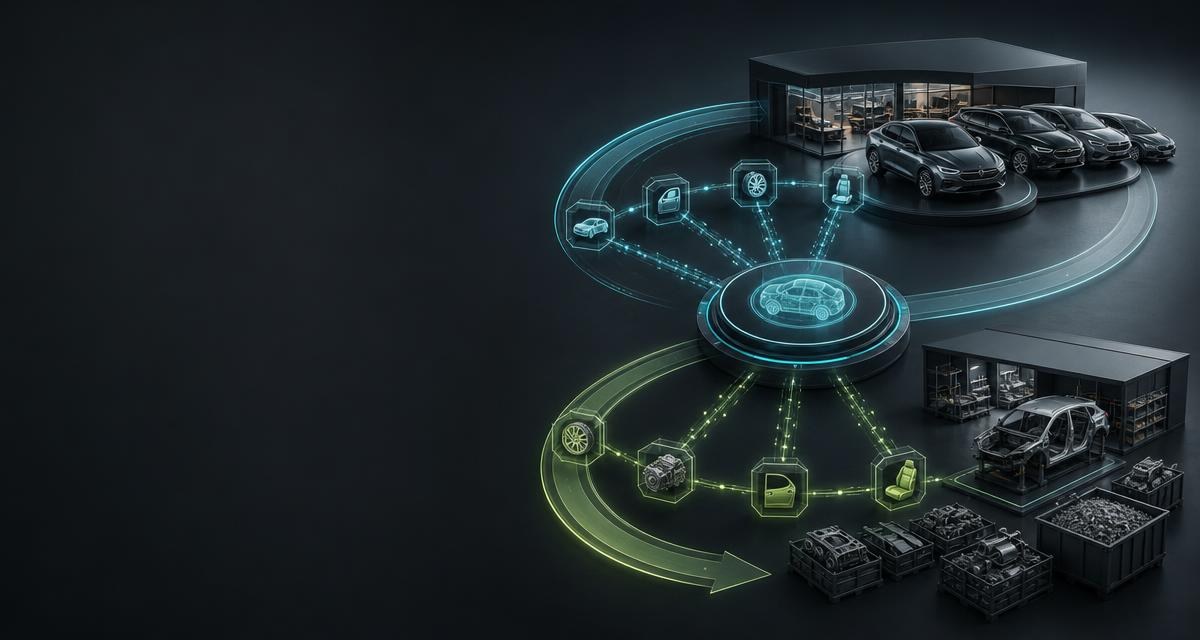
Vehicle traders and recyclers often handle the same vehicle in sequence but in separate systems. Intake creates documents, images, equipment and condition data; recycling turns these into dismantling decisions, part identities and stock. tapinomahub provides API building blocks for structured handovers without bypassing data rights or expert decisions.
Process 1: vehicle trade to recycler
- Create the record from a registration image with
POST /vehicles/intake, or extract documents throughPOST /scanner/document/registration. - Match technical data through
GET /vehicles/{tapiId}orGET /vin/{vin}/vehicle. - Document visible condition from authorised images with
POST /vision/condition-report. - Use
GET /vin/{vin}/economic-evaluationas decision support and retain assumptions in the system of record. - Connect the recycler through
POST /client/partner-workspacesand release only required data. - Confirm identity at arrival, record differences and continue dismantling planning in the recycler ERP.
Process 2: parts inventory to workshop
- Read a removed-part label through
POST /scanner/label/extract-partnumbersandGET /parts/oe/normalize. - Match fitment, family and supersessions with
GET /parts/oe/{oeNumber}. - Add IAM alternatives through
GET /parts/oe/{oeNumber}/aftermarket-referencesfor new, exchange and used options. - Support image-based condition through
POST /vision/part/qualitywhile retaining originals and human release. - Check a workshop's OE basket against a VIN through
POST /vin/cart-check. - Handle order, inventory, price and warranty in ERP or commerce; tapinomahub does not replace the transaction.
Shared data contract
- tapiId, VIN reference and internal vehicle ID with ownership
- OE/IAM number, part identity, donor and product status
- Source, timestamp, confidence, human approval and version per field
- Purpose, legal basis, roles, visibility and retention
- State changes for intake, transport, arrival, dismantling, test and sale
- Error, withdrawal and correction process between partners
Sources and legal references
Frequently asked
Does tapinomahub automatically transfer a complete service history?
No. The public API does not promise a complete service or diagnostic history. Partners may transfer only available and lawfully released data.
Can a dealer prepare a recycling decision before delivery?
Yes. Intake, technical data, condition and economic evaluation can create a structured lead-in; final expert acceptance remains with the operator.
Does tapinomahub sell the part to the workshop?
No. The API supports identity, fitment, quality and cart checks. Order, price, stock and contract remain in ERP, shop or marketplace.