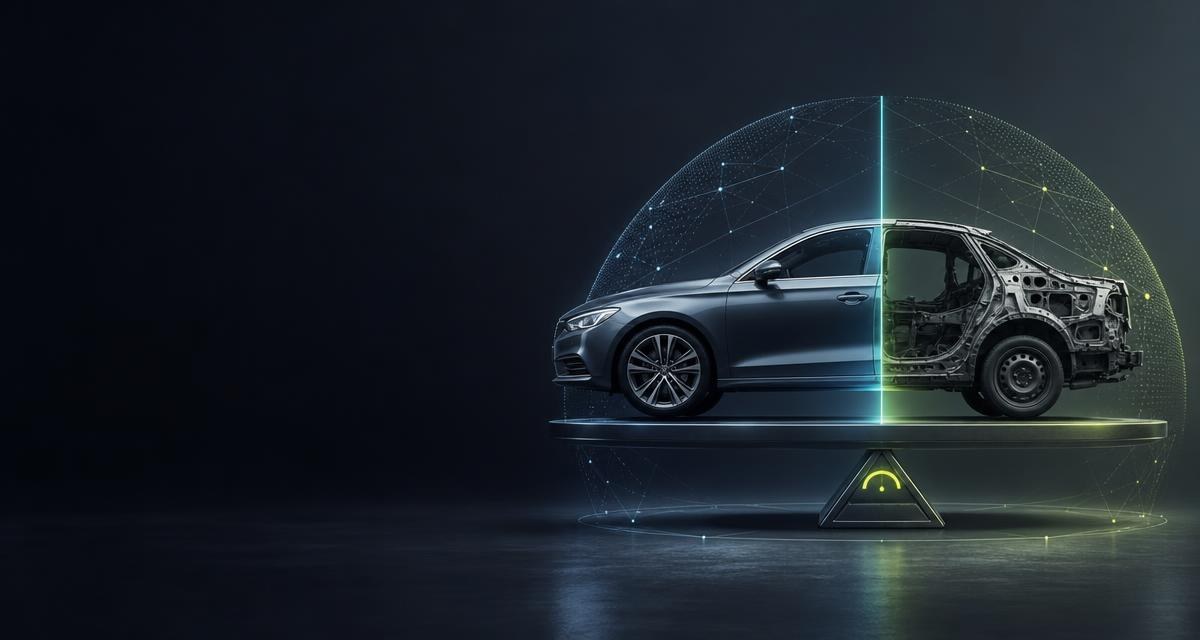
The difference between a used car and an end-of-life vehicle is legal, not technical. Both can stand in the same yard and look alike. Which one it is decides the onward route: sale and export on one side, certificate of destruction and orderly treatment on the other.
Why the question comes up so often
A considerable share of vehicles disappearing from national registers appears in no treatment statistic. They are exported as used cars. Part of that is exactly what it says — a roadworthy vehicle with a buyer abroad. Another part is an end-of-life vehicle declared as a used car because exporting is easier than treating.
Authorities look closely at this, and it matters correspondingly for a dismantler to classify and document their own transactions cleanly.
The indicators used
There is no fixed formula; the decision follows the overall picture. Regularly applied indicators include:
| Indicator | Points to goods | Points to waste |
|---|---|---|
| Roadworthiness | Roadworthy or repairable at reasonable cost | Not roadworthy, repair uneconomic |
| Treatment state | Untouched | Depollution or dismantling begun |
| Completeness | Essential components present | Engine, gearbox, wheels or converter missing |
| Transport securing | Loaded secured against damage | Stacked, unsecured, wedged with other vehicles |
| Documents | Contract, invoice, evidence of functioning | No documents, no named recipient |
| Value | Market-level purchase price | Price at material-value level |
What applies to export
If it is waste, waste shipment law applies. It differentiates by waste type and destination and requires, depending on the case, notification, consent from the authorities involved and financial guarantees. A shipment without the required procedures is an illegal shipment carrying take-back obligations and further consequences.
European waste shipment law has been revised in recent years; application dates and details should be checked against the current position before any export. If it is a product, the general customs and foreign trade rules for goods apply instead.
What a business should document
- Condition at intake, with date and photos — roadworthy, not roadworthy, damage, completeness.
- The classification made and the reasons for it. A decision that happened only in someone's head cannot be evidenced later.
- If sold as a vehicle: buyer, price, contract, whereabouts of the papers.
- If treated as an end-of-life vehicle: certificate of destruction, depollution, part removal, transfer.
These facts arise anyway in a properly kept vehicle file — see Digitalisation in vehicle dismantling: where it actually pays. The difference lies in whether they can be found when it matters.
Why the reform sharpens the topic
The ongoing European reform of end-of-life vehicle law addresses this distinction explicitly and aims to limit the export of non-roadworthy vehicles. For domestic dismantlers that would be good news: vehicles that flow out today would remain in treatment — and therefore in the parts market. Assessment in EU ELV Regulation 2026/1738: timeline and impact on businesses.
Sources and legal references
Frequently asked
Is a non-roadworthy vehicle automatically an end-of-life vehicle?
Not automatically, but it is a strong indicator. What decides is the overall picture, in particular whether repair at reasonable cost is demonstrably intended.
May I sell an end-of-life vehicle abroad?
If it is waste, waste shipment law and its procedures apply. A shipment without those procedures is illegal and carries take-back obligations.
What if I have already started depollution?
Then classification as waste is as a rule unambiguous. The decision about an export has to be made before that.
Who decides in a dispute?
The competent authority, ultimately the courts. For the business that means: your own classification should be reasoned and documented.
This article is general professional guidance and does not replace legal advice. The applicable statute and the conditions imposed by your competent authority prevail.