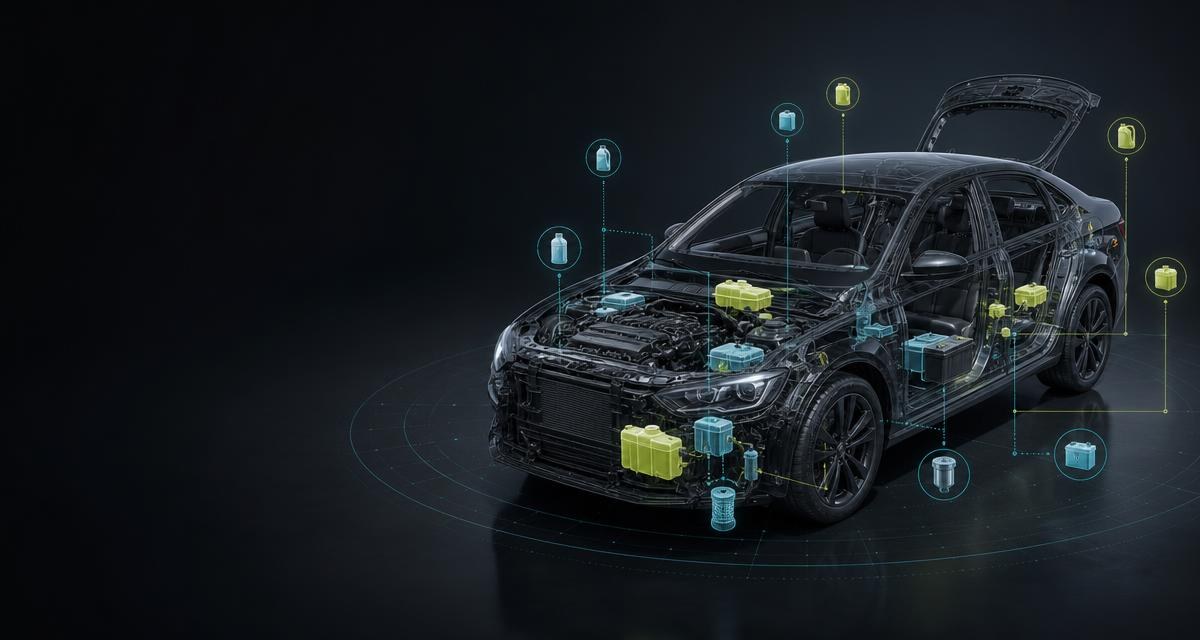
- Depollution
- Depollution is the complete removal of operating fluids and hazardous components from an end-of-life vehicle before it is dismantled further or stored.
Why it comes first
As long as a vehicle still holds its fluids, every movement is a risk: a lifted vehicle drips, a damaged line empties into the ground, a toppled vehicle loses fuel. Depollution before all further steps is therefore not a recommended sequence but the precondition for surfaces, separators and collection facilities to serve their purpose at all.
For an audit it is also the most visible point: a non-depolluted vehicle standing in the area for depolluted vehicles is a finding that needs no file study. See Authorised treatment facility: requirements and periodic review.
What has to be removed
The scope is set at European level and transposed in the German ELV ordinance. In essence it covers:
- Batteries and liquefied gas tanks.
- Potentially explosive components — airbags and belt tensioners — removed or neutralised.
- Operating fluids: fuel, engine oil, transmission and axle oil, hydraulic oil, coolant and antifreeze, brake fluid, air-conditioning refrigerant and any other fluid present — collected and stored separately, unless needed for the reuse of the component concerned.
- Mercury-containing components, as far as they can be identified.
- Catalytic converters.
- Components containing copper, aluminium and magnesium where these metals are not segregated in the shredding process.
- Tyres and large plastic components — bumpers, dashboard, fluid containers — where they are not segregated in shredding.
- Glass.
The practical sequence
- Identify the vehicle and open a file. Capture the VIN, check the papers, issue the certificate of destruction.
- Make safe. Disconnect and remove the battery, exclude ignition sources, neutralise or remove pyrotechnic components.
- Recover the refrigerant. Before any work that could damage lines.
- Drain fluids separately. Fuel, oils, coolant and brake fluid into labelled containers.
- Remove hazardous components. Catalytic converter, mercury-containing parts, LPG tank.
- Check and move. Only then may the vehicle enter the area for depolluted vehicles.
- Document. What was removed, in what quantity, and where it went.
The order is deliberately built so that each step makes the next one safe. Removing the battery only after taking out the airbags means working on a live system with pyrotechnic components in it.
Depollution and parts sales
Depollution is an obligation, but it is also the moment at which the vehicle first comes apart. Standing at the vehicle anyway, you can record in the same pass what is sellable. The marginal effort is small: the walk is already made, the vehicle is already identified, the file is already open.
Frequent findings
- Vehicles standing in the wrong area — the classic finding.
- Collection containers without clear labelling or with mixed contents.
- Refrigerant recovery without evidence of competence or of onward transfer.
- Airbag removal without documented competence of the person doing it.
- Quantities that cannot be assigned to any vehicle.
Operating case: a batch with traceable quantities
User story: As a yard manager, I want to schedule several ELVs in the morning and see for each one at shift end whether pretreatment is complete, what quantity was actually removed and where it went. The vehicle record opens the job; the technician records measurements, container and exceptions at the work step.
| Station | Data | Business benefit |
|---|---|---|
| Create vehicle | VIN and legible vehicle details; registration-document extraction can prefill the record | No handwritten second list |
| Plan work | Vehicle type, powertrain and operating checklist | Special cases such as high voltage or refrigerant appear before work starts |
| Record removal | Actually measured quantity, material stream, container, operator and exception | Unassigned quantities and open work surface immediately |
| Release | Completeness check and handover to dismantling or storage | No shell passes the required step unnoticed |
Measure it: Track completed checklists before dismantling, quantities without a vehicle link, rework, spill incidents and time by powertrain. The digital record then improves both throughput and evidence quality.
Sources and legal references
Frequently asked
Must a vehicle be depolluted before storage?
Vehicles not yet depolluted may only stand on suitable, liquid-tight surfaces with collection facilities. Depollution precedes any further treatment.
May fluids stay inside a component that is resold?
Fluids may remain in a component where they are needed for its reuse. The component must then be stored so that nothing escapes.
Who may remove airbags?
Handling pyrotechnic components carries its own competence requirements. Whoever removes or neutralises them must be able to evidence the corresponding qualification.
Does depollution count towards the recovery quota?
It is the precondition for the removed substances entering an orderly recovery route at all. How the quantities enter the quota is covered in Recovery quotas: understanding the 95 and 85 per cent targets.
This article is general professional guidance and does not replace legal advice. The applicable statute and the conditions imposed by your competent authority prevail.