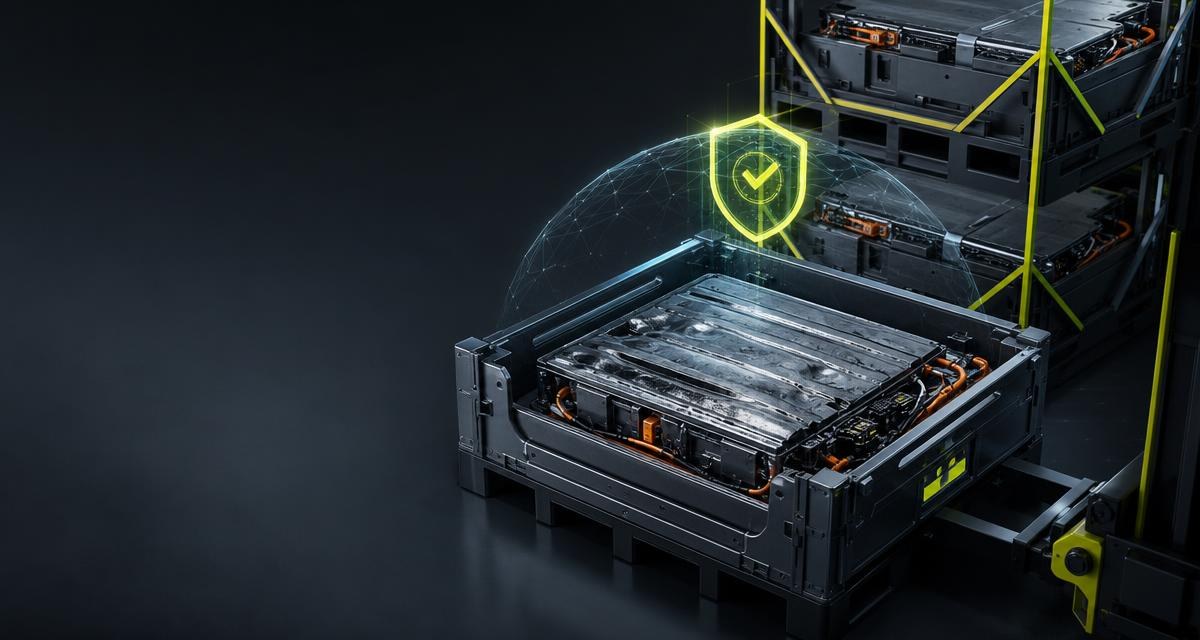
Accident vehicles and removed HV storage systems can combine electrical, chemical, mechanical, fire and explosion hazards. The label lithium battery is not enough for transport or temporary storage. Condition, reaction risk, UN assignment, packaging and lawful transport route require qualified assessment before handover.
Classify condition before movement
- Intact and demonstrably functional
- Defective or damaged but not liable to dangerous reaction under normal transport conditions
- Critically defective with potential rapid disassembly, flame, dangerous heat or gas release
- Unknown condition after accident, deep discharge, water ingress, deformation, smoke, odour or thermal event
Operational workflow
- Secure the hazard area, avoid unnecessary movement and involve qualified personnel.
- Record identity, accident evidence, warnings, temperature anomalies and visible damage.
- Apply quarantine and observation controls from the site risk assessment.
- Have dangerous-goods classification and permitted packaging set by competent personnel.
- Coordinate carrier, recipient and any authority determination before collection.
- Record classification, packaging, documents, handover and changes end to end.
Data required before collection
- Manufacturer, type, serial number, chemistry, energy, voltage and mass
- Installed or removed status and electrical isolation state
- Damage type, time, images, diagnostics and temperature history
- Assessment as defective, damaged, critically defective or unresolved
- UN number, special provision, packing instruction and packaging
- Consignor, dangerous-goods owner, carrier, recipient and handover time
Sources and legal references
Frequently asked
Can a trader return a damaged battery by parcel carrier?
Not without suitable classification and a lawful transport route. Damaged and critically defective lithium batteries are subject to special dangerous-goods requirements.
Is electrical isolation enough?
No. Isolation does not automatically remove chemical, thermal or mechanical risks from damaged cells.
Why record an unknown condition separately?
So missing assessment is not mistaken for an intact battery and movement, storage or shipping waits for a qualified decision.