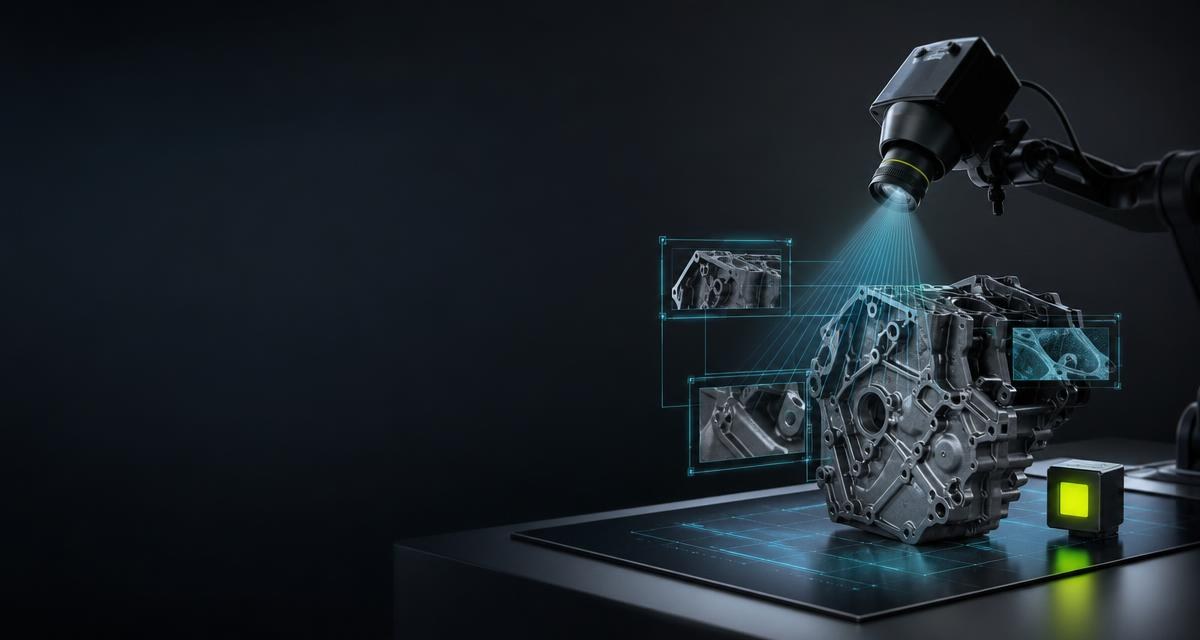
There is no keyboard in the workshop, but everyone has a phone in their pocket. That makes the camera the obvious capture device for a dismantling yard: photograph the type plate, carry on working, do the evaluation later at the desk. It saves time — and it prevents the most expensive class of error in stock keeping: the mis-typed number.
What can be extracted from images
- VINs from the type plate, the stamping or the windscreen — see VIN: Reading, checking and using the vehicle identification number.
- Part numbers from the component: manufacturer number, supplier number, revision level.
- Type plates with engine codes, gearbox codes and equipment codes.
- Labels and stampings on control units, gearboxes and axle components.
What follows is an assignment: the extracted number goes into a cross-check that returns article type, vehicle application and cross references — see OE number: reading original part numbers correctly.
What matters when taking the picture
- Get close enough. The decisive mistake is too wide a frame. The number should fill the picture, not appear in it.
- Do not throw away resolution. A thumbnail shrunk for sending turns a type plate into a grey smudge. Always transfer the original.
- Light from the side, not head on. On stamped or cast numbers, raking light creates the contrast a frontal flash erases.
- Clean first. Ten seconds with a rag saves the follow-up question.
- Two shots instead of one. On difficult surfaces the second shot from another angle is often the legible one.
The decisive rule: gaps stay gaps
For every image evaluation at tapinomahub one rule holds: what the image does not evidence is not output. If a character of a part number cannot be read with certainty, the position stays open and is marked as open. We do not output a completed number that is right in format and guessed in content.
The reason is commercial, not philosophical. An empty position costs one enquiry. A guessed position costs a wrongly sold article, shipping out and back, a credit note and a review — and at worst the trust of a workshop that does not come back.
What image recognition does not do
- Condition assessment. No image tells you whether a brake disc is still within tolerance or a control unit works.
- Hidden identifiers. What sits behind a bracket does not become visible by photographing it.
- Retrofits. A part fitted from another vehicle carries its own number, not the vehicle's.
- A substitute for the vehicle file. Image evaluation returns numbers; the link to the donor vehicle comes from the process — see Part identification: from removed component to sellable record.
Frequently asked
What image quality do I need?
As high as possible, and always the original rather than a shrunk preview. The most common cause of an empty result is an image that is too small or taken from too far away.
Are stamped numbers recognised too?
Yes, where the contrast is right. Raking side light instead of a frontal flash, and a cleaned surface, make the biggest difference.
What happens if the number is only partly legible?
The uncertain positions stay open and are marked as open. We do not complete a number we cannot evidence.
Is an analysis without a result charged too?
Yes. The analysis is the service delivered and causes cost even when nothing was legible. A refund applies where the analysis could not be performed at all.