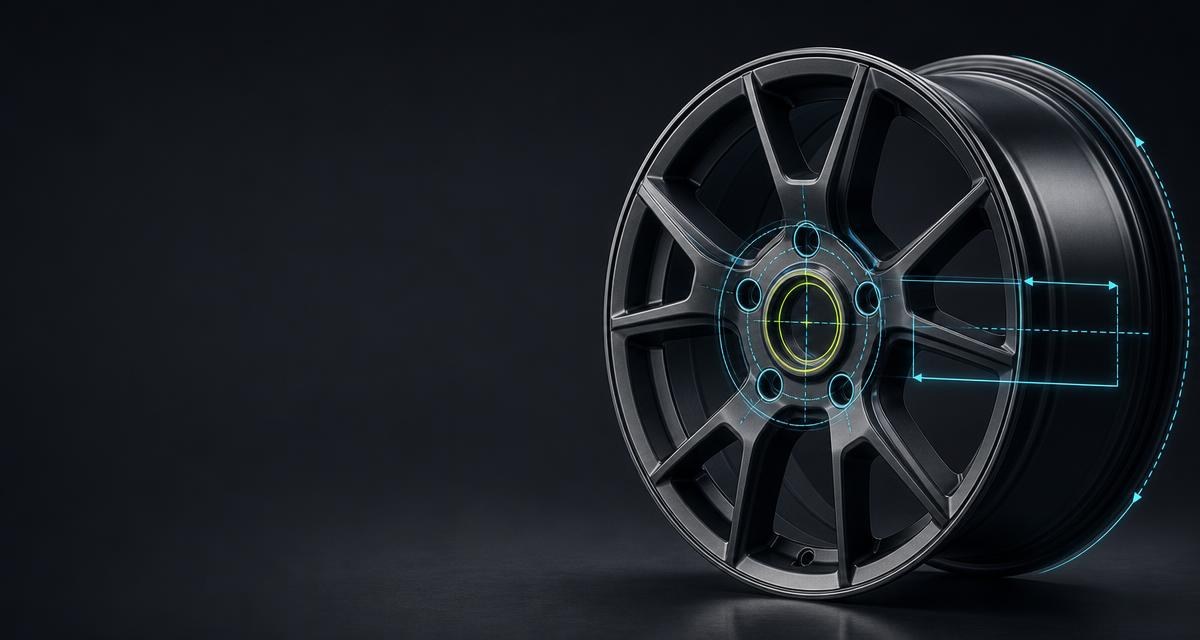
Wheels are among the fastest-selling used parts and among the most frequently mis-described. The reason is that „17 inch, fits VW“ sounds like a statement but is not one. Fitment comes from five dimensions, and naming only two means selling to customers who send it back.
The five dimensions
| Dimension | Meaning | Example |
|---|---|---|
| Diameter | Rim diameter in inches | 17″ |
| Width | Rim width in inches | 7.5J |
| PCD | Number of bolts and diameter of the bolt circle in millimetres | 5 × 112 |
| Offset (ET) | Offset of the mounting face from the wheel centre in millimetres | ET 45 |
| Centre bore | Diameter of the hub centring in millimetres | 57.1 |
Offset is the entry most often missing and the one that decides most. It determines how far the wheel sits in the arch — and therefore whether it fouls the brake, rubs the wing or sits cleanly. Two wheels with identical diameter, width and PCD can be unusable on the same vehicle because of a differing offset.
Where the dimensions sit
- On the back of the spokes or on the rim flange, cast in. Diameter, width and offset are usually there.
- On the inside of the rim well, together with the manufacturer marking.
- As an [[oe-nummer|OE number]] on original wheels — the strongest statement of all, because it names the complete version.
- As a test or approval marking, additionally on aftermarket wheels.
Original or aftermarket
Original wheels carry the vehicle manufacturer's part number and can therefore be assigned unambiguously to a model line. Aftermarket wheels carry a manufacturer marking instead and require corresponding approval or an expert report for use on the vehicle; which evidence is required in an individual case follows from registration law and should be checked where relevant.
For selling that means: on original wheels the OE number is the key entry. On aftermarket wheels it is the five dimensions plus a note on whether papers exist. If the papers are missing, that belongs in the listing too — as a statement, not as an omission.
Describing condition without glossing over
- Kerb damage named and photographed, stating whether only the finish or the material is affected.
- Runout and imbalance are invisible. If you cannot test, write „not tested“ rather than „perfect“.
- Corrosion in the rim well matters on alloy wheels because it affects sealing.
- Repairs disclosed. Welded or straightened wheels are their own case and must not appear as undamaged.
- Sell the accessories with them — bolts, centring rings, centre caps and tyre pressure sensors add value and should be named explicitly when included.
As a set or individually?
A set of four matching wheels in matching condition achieves more than four individual sales and moves faster. Single wheels pay where someone is looking to replace one damaged wheel — and then exact agreement on all five dimensions and the version is decisive, because the wheel has to run beside three existing ones.
Frequently asked
What does ET mean on a wheel?
Offset: the displacement of the mounting face from the wheel centre in millimetres. It determines how far the wheel sits in the arch and is decisive for fitment.
Where do I find PCD and offset?
Usually cast on the back of the spokes or the rim flange. A photo of the inner face under raking light makes them readable.
Is „fits VW“ enough?
No. Within one brand there are different bolt circles, offsets and centre bores. Without the five dimensions fitment cannot be determined.
Must I state whether papers exist?
On aftermarket wheels that belongs in the listing. If the evidence is missing, say so explicitly rather than leaving it out.